
The short answer.
Call a plumber who handles water heaters. Plumbers work with the water connections, relief valves and gas or electric supply that heaters depend on, and they can usually replace the unit too if repair no longer makes sense. If the problem is a gas smell, leave the house and call 911 and the gas utility first.
For a leak at the tank, shut off the cold water supply above it and turn off the power or gas. Then call the 24/7 line. Call to ask about timing.
Who handles what.
Our water heater repair page lists what we check on each type.
| Problem. | Best first call. | Why. |
|---|---|---|
| Gas smell near the heater. | 911 and the gas utility. | Safety comes before any repair. |
| No hot water, electric tank. | Check the breaker, then a plumber. | A tripped breaker is a quick fix. |
| No hot water, gas tank. | Check the pilot and gas valve, then a plumber. | Igniter or thermocouple faults are common. |
| Water leaking from the tank. | A plumber right away. | Tank failure may need replacement. |
| Lukewarm water. | A plumber. | Elements, thermostat or sediment may be at fault. |
| Power or gas outage in the area. | The utility. | Not a heater fault. |
Checks you can make in five minutes.
Look at the power or pilot.
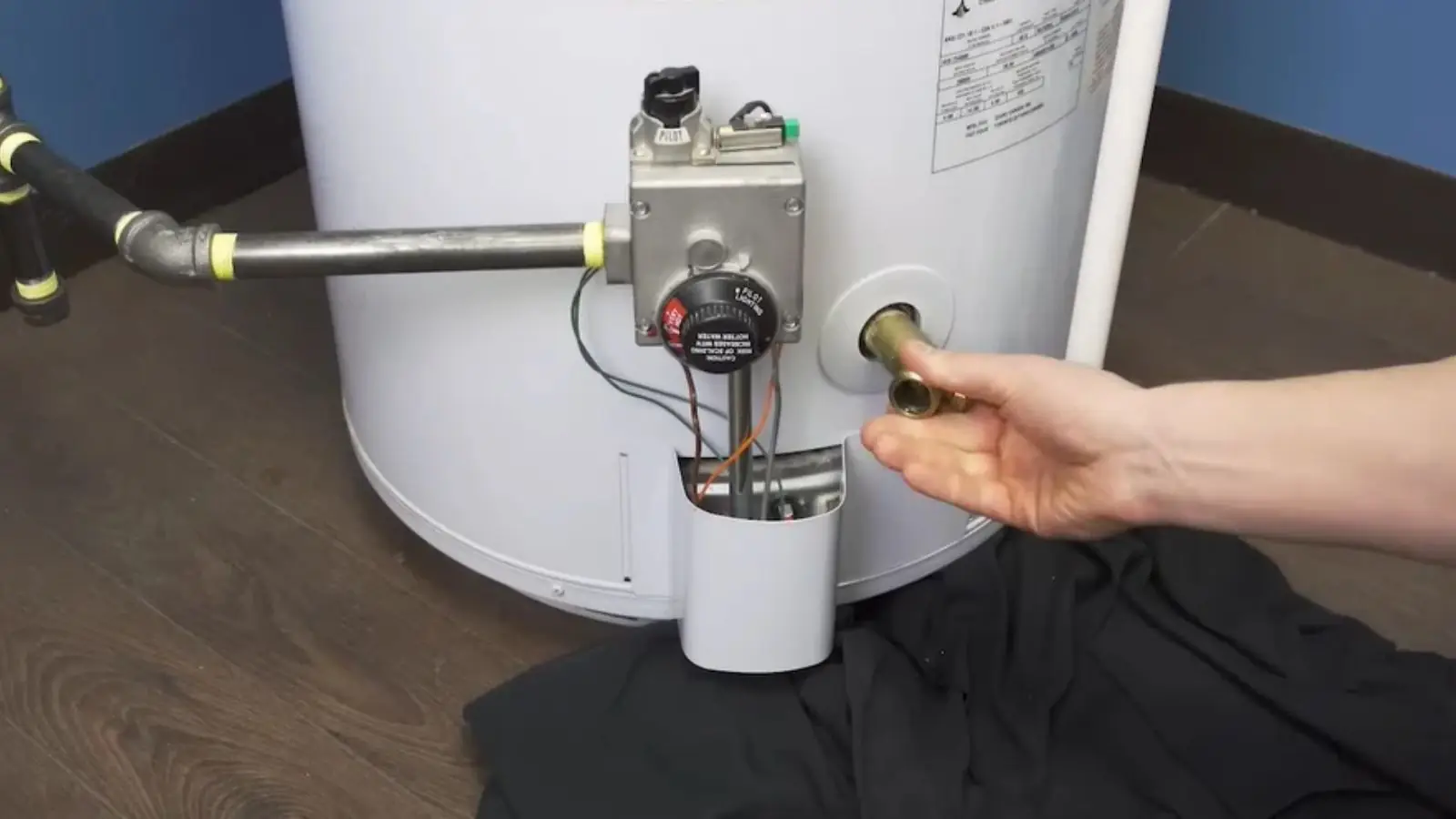
Electric tanks need a live breaker. Gas tanks need a lit pilot or working igniter.
Check the temperature setting.
A low setting can feel like a failure.
Check for water on the floor.
Any water around the base is a reason to shut off the supply and call.
Look for error codes.
Newer units show a code or blinking light that helps the plumber.
Need a plumber for this?
Call the 24/7 line and a dispatcher will help you right away.
Common repairs we handle.
Thermostat or element swap.
Electric tanks lose heat when an element or thermostat fails.
Igniter or thermocouple.
Gas tanks stop heating when these safety parts fail.
Relief valve replacement.
A dripping valve needs attention before pressure builds.
Anode rod service.
A worn rod lets the tank corrode faster.
Sediment flush.
Draining a tank clears buildup that causes noise and slow recovery.
Tankless descaling and error codes.
Questions to ask before you hire.
A good plumber should be able to answer simple questions plainly. Is the company licensed and insured, and can you verify the license? Will you get a clear price before work begins? Can they tell you when they can come? Will they explain what failed and whether repair or replacement makes sense?
Be careful with anyone who insists on replacement before looking at the tank, or who will not explain the diagnosis. A fair plumber shows you the failed part or describes it in terms you can follow.
Repair call or replacement call.
If replacement looks likely, our water heater replacement page explains the process.
Likely a repair.
- Tank under about ten years old.
- No water leaking from the tank.
- A single failed part.
- The heater worked fine until today.
Likely a replacement.
- Water leaking from the tank body.
- Rust colored hot water.
- More than one major repair recently.
- A very old tank with sediment noise.
Rather have a pro handle it?
Call to ask about timing.
What a good service call looks like.
A good visit starts with questions about what you noticed and when. The plumber checks the power or gas supply, the controls and the safety devices, then explains what failed and what each option involves. You should see or hear a clear price before work starts.
Afterward, expect a test of the repair, a look at the relief valve and a quick note on any other risks, such as rust, sediment or a tight installation. If the plumber recommends replacement, ask why and what the alternatives are. A confident plumber welcomes those questions.
Stratford note: verifying a license.
Connecticut offers an eLicense lookup run by the Department of Consumer Protection, where you can search a plumber's license and confirm its status before they start. Ask the Stratford building department whether your replacement or installation needs a permit.
The same lookup works for contractors serving Trumbull and Fairfield, so use it whenever you are weighing a new company.
The U.S. Consumer Product Safety Commission urges users to lower their water heaters to 120 degrees Fahrenheit to reduce the risk of tap water scalds, so ask the plumber to set the thermostat with that guideline in mind.
Leaking tank at night.
Shut off the cold water supply valve above the tank, turn off the electric breaker or gas control and move belongings away from the water. Call the 24/7 line and tell the dispatcher what type of heater you have.
Questions we hear.
A plumber who services your heater type. For a gas smell, leave and call 911 and the gas utility first.
Some models have simple instructions on the tank. If it will not stay lit or you smell gas, call a professional.
Use the state's eLicense lookup and confirm the status before work begins.
Yes. The 24/7 line is always answered.
Rules vary. Ask the Stratford building department for your project.