
Drain cleaning in Stratford, CT, any hour of the day.
Drain cleaning is the removal of whatever is blocking a pipe, from a grease plug in a kitchen line to roots in the main drain under the yard. If water is coming up through a floor drain or the toilet is gurgling when you run the washer, treat it as an emergency, because that water has nowhere else to go.
Our 24/7 line is answered by a dispatcher who books the soonest available plumber. While you wait, stop running water in the house, pull rugs and boxes back from low drains, and keep everyone out of any pooled water that may contain sewage.
When a clogged drain is an emergency.
A single slow bathroom sink can wait for a daytime visit. A backup cannot. Call at once if water rises in a tub when the toilet flushes, if a basement floor drain bubbles, or if more than one fixture is clogged at the same time. Those patterns usually mean the blockage sits in the main drain, past every branch line.
After hours, the 24/7 line works the same as it does at noon. Tell the dispatcher which fixtures are affected and whether water is spilling onto the floor. That detail decides which machine goes on the truck.
Signs the clog is deeper than the sink.
Gurgling after you flush.
Air is being pulled through a partly blocked drain line. It often shows up first at the toilet nearest the main.
Two fixtures backing up together.
A shower and a washing machine draining into one stack point to the shared line, not to either fixture.
Slow drains in every bathroom.
Fixtures on different branches slowing down at once suggest a restriction in the main drain.
Sewer smell near a floor drain.
A dry trap or a partial blockage can push gas into the house even before water appears.
Water level changes in the toilet bowl.
The bowl rising or dropping when another fixture runs means the line is pressurizing as it fills.
Clogs that return within weeks.
A snake that punches a hole through a plug leaves the pipe wall coated. The hole closes again, usually within a month or two.
Kitchen sink clogs: grease, food and what the cable finds.
Kitchen drains clog differently from bathroom drains. Cooking fat cools inside the line and forms a waxy sleeve that narrows the pipe, and rice, coffee grounds and starchy peels settle into it. The sink drains slower each week until the day it stops.
We feed a cable with a cutting head through the trap arm and the branch behind it, then flush the line with hot water to confirm full flow. If the sink is attached to a garbage disposal, we check the disposal outlet first, since a jammed or cracked unit can mimic a clog.
Snaking, cabling or jetting: which method fits.
Most calls start with the lightest tool that will do the job. If a cable cleans out the plug but the line fills again soon, the next step is a camera look and often hydro jetting, which washes the full wall of the pipe rather than boring one hole through it.
| Method. | Best for. | Limits. |
|---|---|---|
| Hand auger. | A hair or soap plug in a sink, tub or shower trap. | Reaches only a few feet and cannot scour pipe walls. |
| Drum cable machine. | Branch lines and kitchen drains, roughly 3 to 4 inches across. | Opens a channel but leaves residue on the pipe wall. |
| Sectional cable with root cutter. | Roots and heavy blockages in main drains. | A cutter can snag on a broken joint, so a camera check follows. |
| Hydro jetting. | Grease, scale and sludge buildup along the whole pipe circumference. | Not for a cracked or collapsed pipe, so we inspect first. |
Water backing up right now?
Call the 24/7 line. A dispatcher will take your details and book a plumber.
Shower, tub and floor drain clogs.
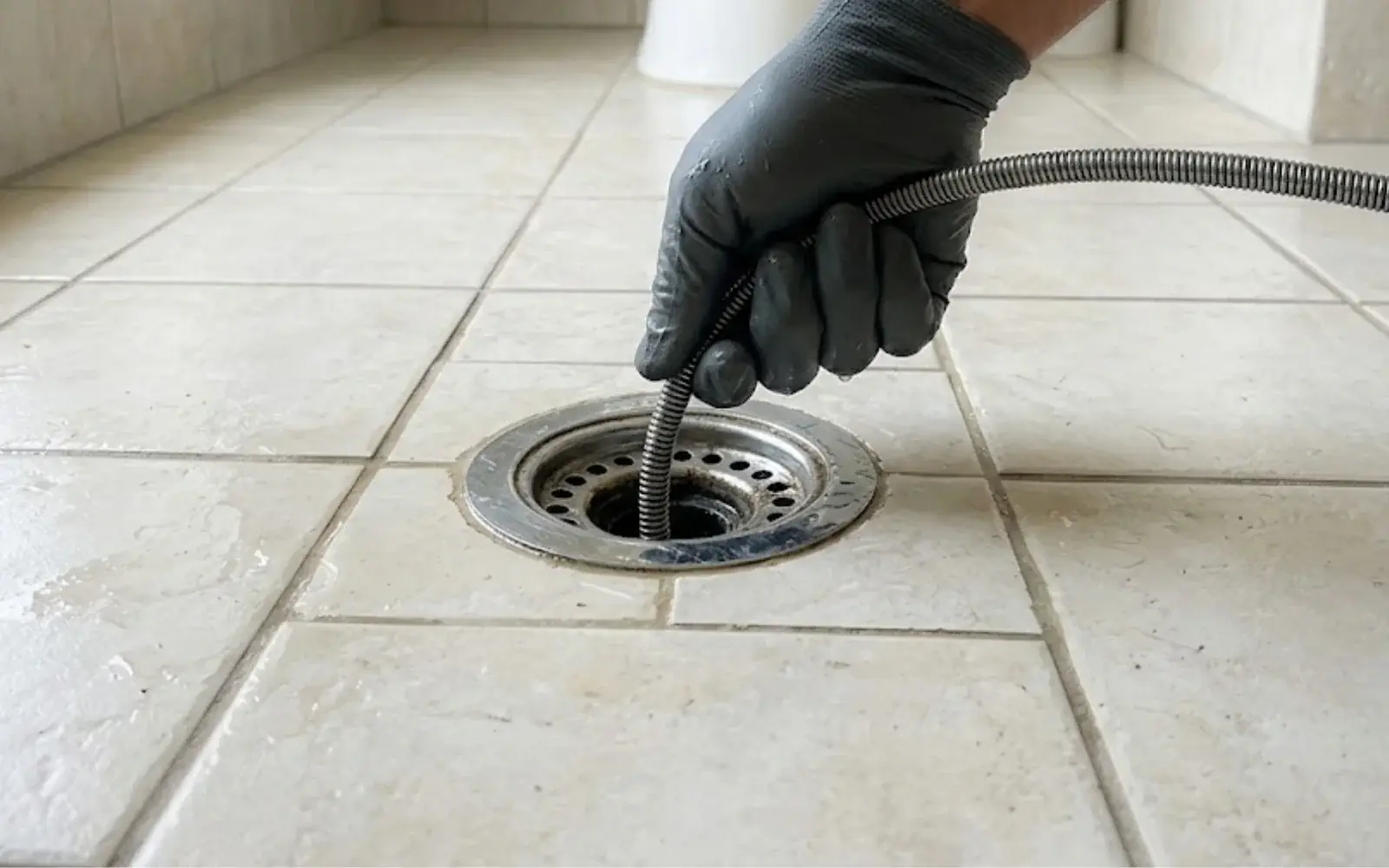
Hair and soap scum build a mat around the drain crossbars and just below the strainer, which is why a plastic hair-catching tool often fixes a slow shower. When that fails, the trap beneath the tub is the next place to look. We pull the strainer, snake the overflow side if needed, and test with a full tub of water so a clog that only shows under load does not slip past.
Basement floor drains are a different story. They sit at the lowest point of the plumbing system and carry whatever the main line cannot. If one is gurgling or holding water, call before it overflows.
A drain line leak can look like a clog.
Sometimes a slow drain is really a broken pipe. If a line has a crack or a separated joint, water escapes into the soil or wall cavity and the pipe never drains cleanly. A camera pass shows the break and the pipe condition, and from there we can discuss sewer line repair if the damage is in the underground run.
How a drain call runs.
Call and describe.
Tell the dispatcher which drains are slow or backed up and where water is spilling.
Diagnose.
The plumber tests the fixtures, finds the clog depth and picks the right machine.
Clear and flush.
The line is cleared, then flushed with water to prove full flow.
Confirm.
You see the water drain freely and hear what we found before the plumber leaves.
What drives the price of drain cleaning.
We give a clear price before work starts, after the plumber sees the problem. These are the factors that move it.
Homeowners insurance usually does not cover a clog that comes from ordinary buildup. Some policies add sewer backup coverage as an extra, so check yours if water has already damaged floors or contents.
Drains and the town sewer in Stratford.
Whether a Stratford street connects to the public sewer or uses septic varies, so ask Stratford Water Pollution Control about your address. If water backs up in the yard cleanout rather than inside the house, ask the town's Water Pollution Control office which section of the line belongs to you before anyone digs.
Low-lying properties near the Housatonic River and the shoreline can see the lowest drains react first during heavy rain. If a floor drain only backs up in storms, tell the plumber, because that points to a different cause than a grease plug.
According to the Connecticut Department of Consumer Protection, you can verify a plumber's license through the state eLicense lookup, which is a sensible check before anyone puts a cable machine into your main line.
Questions we hear.
Yes. The 24/7 line is answered around the clock. The dispatcher will tell you the soonest window when you call.
We advise against it. Caustic cleaner can sit in a blocked pipe and splash back at the next person who opens it, and it does not remove grease or roots well. Tell the plumber if you already used some.
If several fixtures back up together, or water rises in the lowest drain when you flush, the blockage is usually in the main drain. A single slow fixture points to its own branch line.
A correctly sized cable with the right head is safe in sound pipe. In an old or cracked line we choose a lighter approach and often run a camera first.
A simple fixture clog is often cleared within one visit, and a main line may take longer if roots or a repair are involved. The plumber will give you a realistic estimate after looking at the line.
Yes. We check the disposal and the trap arm first. See our garbage disposal repair page if the unit itself is jammed or leaking.