
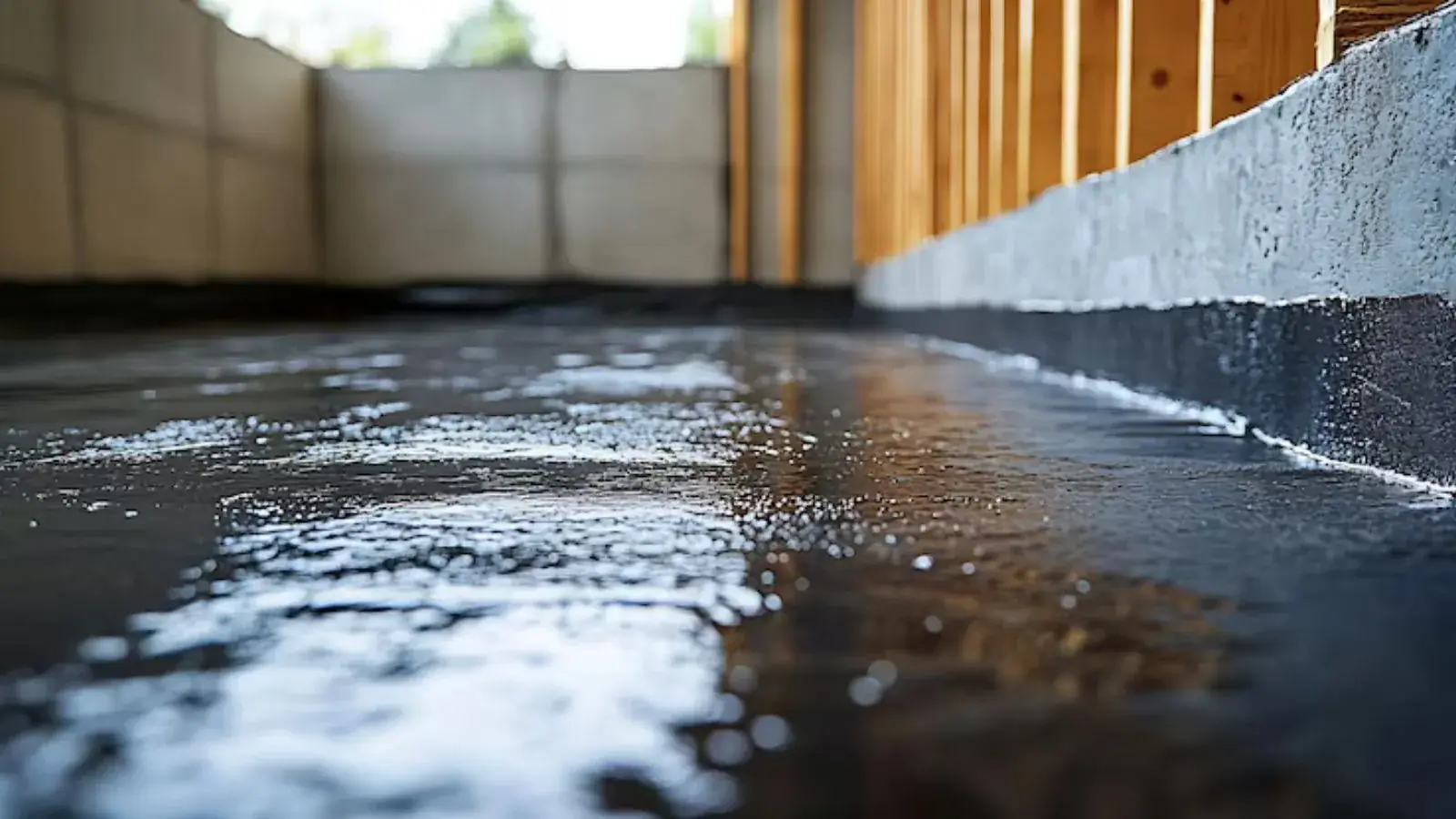
Basement waterproofing in Stratford, CT.
Basement waterproofing is a set of methods for keeping groundwater out of a below-grade space, from managing roof and yard drainage to installing interior drains and a sump pump. The right method depends on how water gets in.
This is a planned service. If your basement is flooding now, call the 24/7 line and a plumber can address the emergency, then we can plan the permanent fix. Move items off the floor, shut off power to wet outlets and do not run a vacuum in standing water.
Where basement water comes from.
Cracks in walls or floor.
Hydrostatic pressure forces water through cracks and cold joints, especially after heavy rain.
Floor to wall joint.
The joint where slab meets wall is a common seepage line.
Window wells.
Clogged or poorly drained window wells overflow into the basement.
Surface grading and gutters.
Water sloping toward the foundation or discharging next to it saturates the soil.
High groundwater.
A rising water table pushes water through the slab from below.
Plumbing leaks.
A leaking pipe can look like groundwater. A leak detection check rules it in or out.
Waterproofing methods compared.
Interior drains usually pair with a sump pump, and we check the whole system for sense before suggesting it.
| Method. | What it does. | Trade-off. |
|---|---|---|
| Gutter and grading fixes. | Keeps roof and surface water away from the foundation. | Low cost, but not enough alone for groundwater. |
| Interior drain tile with sump. | Collects water at the footing and pumps it out. | Handles groundwater well, needs power and a pump. |
| Exterior waterproofing. | Seals and drains the outside of the wall. | Most thorough, but the most digging and cost. |
| Crack injection. | Seals a single active crack. | Good for a specific crack, not for widespread seepage. |
| Dehumidification only. | Controls humidity and dampness. | Does not stop liquid water. |
Crawlspaces and partial basements.
Many New England homes have a crawlspace or a half basement. A wet crawlspace can damage insulation, rot floor framing and feed mold. Fixes include a drain, a sump, a sealed vapor barrier and improved grading.
We describe what we see plainly, including when the problem is a plumbing leak, a missing gutter or a downspout that empties at the foundation. Not every wet basement needs a major system.
How a waterproofing project proceeds.
Inspect.
We look at walls, floor, grading, gutters and the sump if one exists.
Find the cause.
We separate groundwater, surface runoff and plumbing leaks.
Propose.
You get a clear price for the least invasive workable option.
Install and test.
We install drains or pumps, then test under load.
Basement taking on water?
Call the 24/7 line and a plumber will respond.
What drives the cost of waterproofing.
Each house differs, and a clear price comes after an inspection.
Seepage and groundwater damage are commonly excluded from standard homeowners policies. Ask your agent about water backup coverage.
Wet basements near the shore and river.
Stratford is bordered by Long Island Sound on the south and the Housatonic River on the east. Low-lying areas near the water can have higher groundwater, and a basement there deals with more water pressure than one on higher ground.
Before you hire anyone for exterior work, call 811 for utility locates and ask the Stratford building department whether permits apply. Permit rules vary, so check for your property and your planned work.
The national 811 number connects you to the utility locating service, and a locate request before digging is the standard first step for any buried line work. According to the International Code Council, Connecticut's state building codes are based on the 2021 International Codes, so ask the Stratford building department which edition applies to your project.
For a neighborhood that has been studied for storm water, see our South End plumbing guide.
Questions we hear.
It is worth it if water enters regularly or damages finishes. If dampness is mild, grading, gutters and a dehumidifier may be enough.
If you install an interior drain, a sump pump is usually part of it. If only surface water is the issue, you may not need one.
Smaller jobs take a day or two. A full perimeter drain takes longer and depends on access and conditions.
Yes, with care. We discuss how finishes will be protected and restored before starting.
It removes the moisture that feeds mold, but existing mold must be addressed separately.
Call the 24/7 line. See also our sump pump page.