
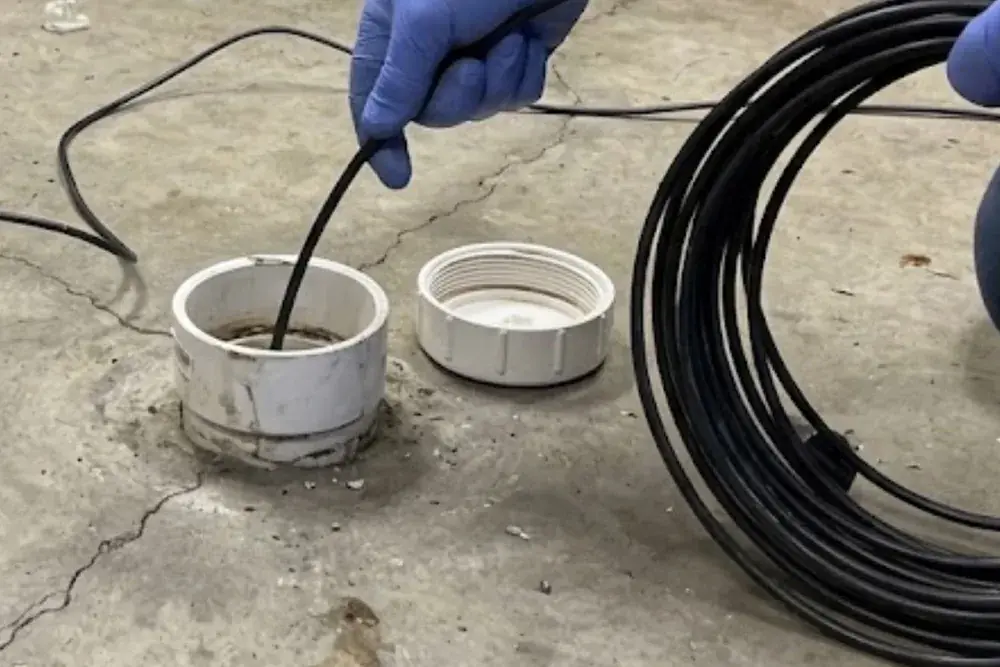
Sewer camera inspection in Stratford, CT.
A sewer camera inspection sends a waterproof camera through your drain line to record its condition. The picture shows cracks, offset joints, root growth, sags that hold water and scale buildup, so repairs are based on evidence rather than guesses.
Planned inspections are scheduled when you want them. If sewage is already backing up, call the 24/7 line instead and mention that you want a camera look after the line is cleared.
What the camera can show you.
Defects are commonly graded using the NASSCO PACP coding system, which gives inspectors a shared way to describe what they see. We describe findings in plain terms and show the timestamp on the recording.
Root intrusion.
Fine roots at joints or heavy masses that fill the pipe.
Cracks and breaks.
Longitudinal, circumferential or broken pipe walls.
Offset or separated joints.
Sections that no longer line up, which catch debris and let soil in.
Bellies and low spots.
Sags where water sits and solids settle, causing repeat clogs.
Scale and grease.
Heavy deposits that narrow the flow area.
Pipe material and connections.
Cast iron, clay, plastic or Orangeburg, plus where side lines join.
Inspecting before you buy a home.
A sewer line is expensive to repair and invisible during a showing. If you are buying a house in Stratford or nearby, a camera look before closing can reveal root damage or a collapsed section that a general home inspection does not cover.
Bring the report to your agent or attorney. A finding can support a repair request or a price conversation. Ask the seller where the cleanout is, because that is where the camera enters.
How we read a finding and what usually follows.
If the camera shows damage, our sewer line repair page explains lining and replacement. If it shows heavy buildup, hydro jetting may be the first step.
| Finding. | What it means. | Likely next step. |
|---|---|---|
| Light roots at a joint. | A joint is open enough to admit moisture-seeking roots. | Root cutting now and a maintenance plan. |
| Clean pipe, steady flow. | No defects found on the run inspected. | No action, keep the recording for reference. |
| Belly with standing water. | A section sags below the slope of the line. | Monitor or replace the low section. |
| Cracked pipe. | The wall has failed along its length or circumference. | Lining or spot repair. |
| Collapsed or offset section. | The pipe has lost shape or alignment. | Excavation and replacement. |
Want to see your sewer line?
Call to schedule a camera inspection with a plumber.
Inspection visit, step by step.
Find access.
We locate the cleanout or remove a fixture to enter the line.
Run the camera.
The camera travels the line while you or we watch the live feed.
Mark defects.
We note the distance to each defect and, where useful, locate it above ground.
Report.
You receive the video and a clear explanation of what we found.
What shapes the price of an inspection.
The price is clear before work starts and depends on these factors.
Camera findings can help in a claim discussion, but insurers decide coverage by policy terms. Keep the video and any dated photographs.
What to know about Stratford lines.
Stratford has a mix of neighborhoods, from busy commercial streets to quiet residential and shoreline areas. Lines in older areas more often use clay or cast iron, so a camera look before purchase is especially useful there.
The town's Water Pollution Control office can tell you where the town sewer main sits, which tells you where your responsibility starts. Ask before buying a house with a line crossing a neighbor's lot.
The national 811 number connects you to the utility locating service, and a locate request before digging is the standard first step for any buried line work.
Questions we hear.
Most take under an hour, longer if the line must be cleared first. We will tell you before we start.
Yes. Ask the seller for access to the cleanout, and we can schedule the inspection around your timeline.
Yes. You keep the recording and our explanation of what it shows.
We can often enter through a toilet or a roof vent. A cleanout is worth adding if one is missing.
It gives the distance from the entry point, and we can locate that spot above ground with a locator.
We clear it first. See our sewer line cleaning page for how main lines are cleared.