
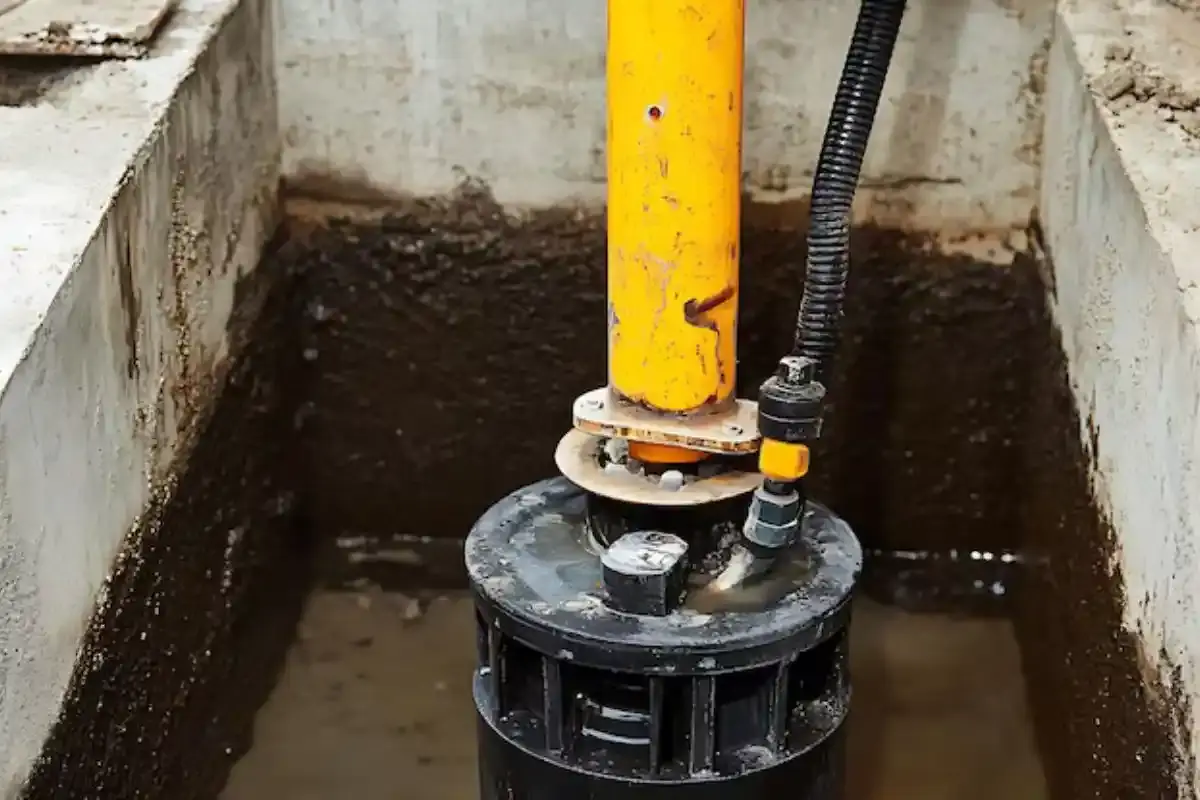
Start at the lowest point.
Water flows downhill, even through soil. The best place for a sump pit is usually the lowest point of the basement floor, or where water has appeared in the past. A pit placed on high ground may never fill, and a pit placed far from the problem will not drain it.
Watch where water first shows up during heavy rain. Look for dark stains on the slab, efflorescence on walls and any cracks. Those clues often point to the wettest corner, and that is where the pit should go.
What to consider when picking the spot.
The low corner.
Water collects where the slab dips, and a pit there catches it first.
Near the foundation wall.
Close to an exterior wall shortens the discharge run and often sits where water enters.
Away from finished areas.
A pump makes noise and may need service, so keep it out of living spaces if possible.
Near a power outlet.
A dedicated outlet with GFCI protection is safest.
Near an exit for the discharge.
A short, direct path outside prevents freezing and clogs.
Clear access.
You should be able to reach the pump for testing and service.
Pit and pump basics.
Our sump pump page covers repair and replacement.
| Item. | What to know. |
|---|---|
| Pit size. | Large enough that the pump does not short cycle, commonly about 18 inches wide. |
| Pit depth. | Deep enough for the float to rise and fall freely. |
| Lid. | A sealed lid keeps out debris and reduces moisture. |
| Check valve. | Stops water from flowing back into the pit. |
| Discharge pipe. | Runs outside and away from the foundation. |
| Backup. | A battery or water powered unit protects against outages. |
Need a plumber for this?
Call the 24/7 line and a dispatcher will help you right away.
Where the water should go.
The discharge matters as much as the pit. Pumped water should end well away from the foundation, on ground that slopes away, or into an approved drain. If it comes out near the wall, it will soak back into the soil and return to the pit in a loop that wears out the pump.
In winter, the discharge line can freeze at the outlet. A properly pitched line, a freeze resistant outlet and a discharge point on open ground reduce that risk. Ask your plumber to confirm the routing before the first storm.
Installation, step by step.
Locate the low point.
We confirm where water collects and where lines run under the slab.
Cut and set the pit.
The slab is opened, the pit is set and the surrounding gravel is placed.
Install the pump and check valve.
The pump sits on a stable base, the float is clear and the discharge is connected.
Route and test the discharge.
We run the line outside, then fill the pit to test the cycle.
Primary pump or backup system.
For finished basements, a backup is worth considering. See basement waterproofing for the broader drainage picture.
Primary pump.
- Runs on house power.
- Handles normal rain and groundwater.
- Starts with a float switch.
- Can fail from age or a stuck float.
Backup pump.
- Runs on a battery or water pressure.
- Keeps working during power outages.
- Needs testing and battery replacement.
- Adds protection on stormy nights.
Rather have a pro handle it?
Call to ask about timing.
Pit depth, float height and noise.
A deeper pit gives the pump more room to cycle slowly. A shallow pit makes the pump start and stop often, which wears the motor and the switch. The float needs enough clear space to rise without catching on the pit wall or the discharge pipe, and that is one of the most common reasons a new pump fails to start.
Think about noise too. A pump running during a storm is normal, but a pump that clanks or hums loudly points to a problem. A sealed lid and a stable base reduce vibration, and a check valve with a quiet design helps cut the slap you hear when water falls back.
Stratford note: shoreline, river and permits.
Stratford lies on Long Island Sound with the Housatonic River to the east. In low lying coastal areas, the water table can sit closer to the surface, so a sump pump works harder. Before cutting the slab or digging for discharge, call 811 and ask the Stratford building department whether permits apply.
The same shoreline logic applies in Milford and Fairfield, where low coastal ground makes pump placement and backup planning important.
The national 811 number connects you to the utility locating service, and a locate request before digging is the standard first step for any buried line work.
Mistakes to avoid.
Do not place the pit where it is hard to reach, where the discharge freezes or where the pump will run constantly because it is pulling from a drainage loop. Do not connect a sump discharge to a sanitary sewer line without checking local rules, since many places prohibit it. Ask the plumber what applies.
Finally, test the system. Pour water into the pit and watch the pump start and stop. A system that has never been tested is a surprise waiting for a storm.
Questions we hear.
At the lowest point or where water enters, close enough to an outside wall for a short discharge run, with an accessible outlet.
Often it should not. Rules vary, so ask the Stratford building department and the local sewer authority.
If storms often cut power or the basement is finished, a backup is worth considering.
Far enough that the water drains away from the house, on ground that slopes away.
Yes, if you dig outside for the discharge. Underground utilities must be marked.