
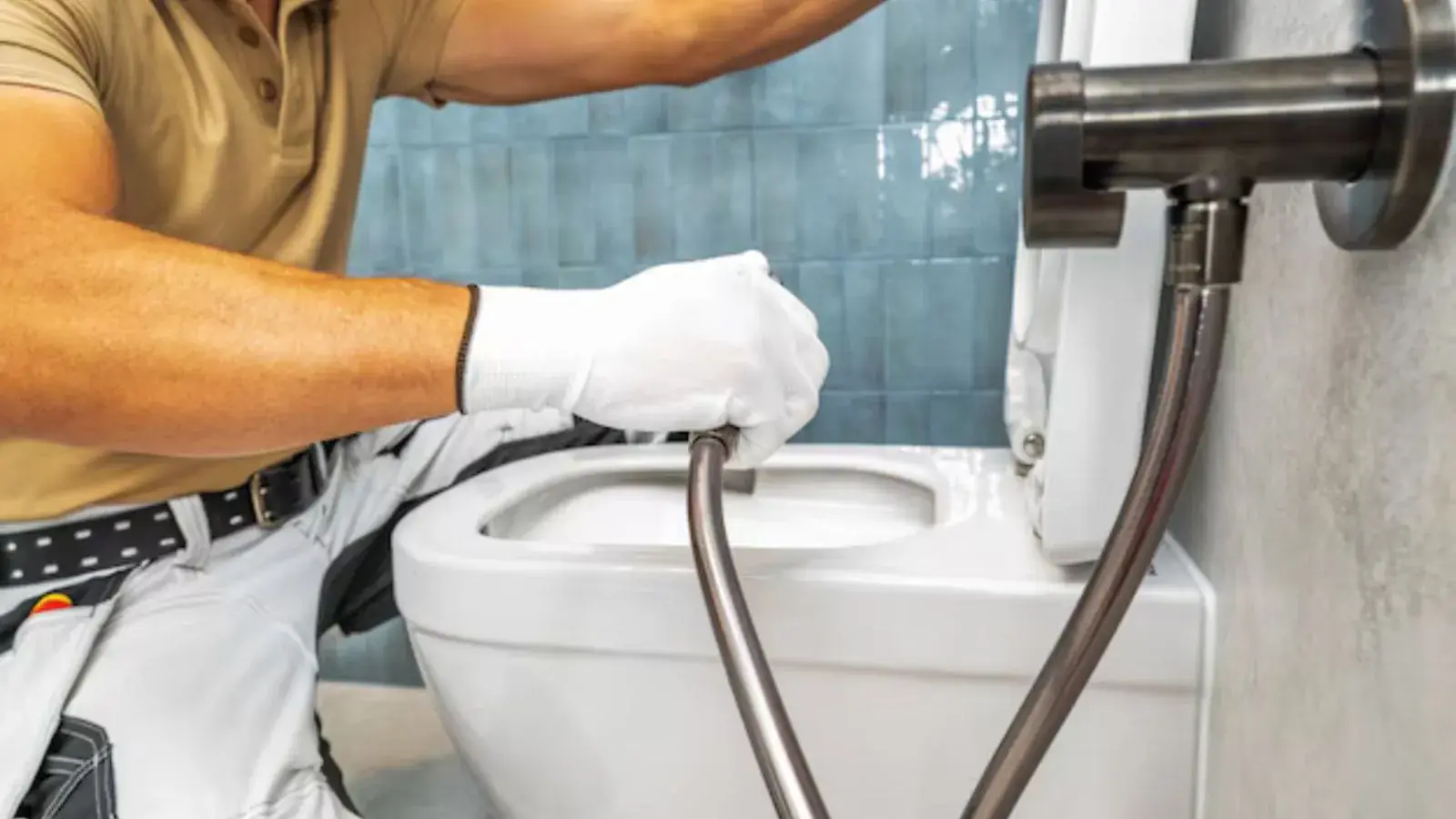
Find the source before you fix anything.
Wipe the toilet and floor completely dry, then lay a few pieces of dry toilet paper around the base. Flush and watch. Check the supply line connection, the tank bolts, the base and the floor. The first drop you see tells you where to look.
This step matters because several different problems produce the same puddle. Sweating from a cold tank, a leaking supply line, a loose bolt and a failed wax ring all look alike on the floor but call for different repairs.
Where the water comes from.
Our toilet repair page covers each of these fixes.
| Where you see it. | Likely cause. | Typical fix. |
|---|---|---|
| Around the base only after flushing. | Failed wax ring or loose flange. | Reset the toilet with a new seal. |
| At the supply valve or line. | Worn connection or washer. | Tighten or replace the line. |
| Under the tank bolts. | Degraded rubber washers. | Replace washers and bolts. |
| All over the tank surface. | Condensation from cold water. | Insulate or reduce humidity. |
| At a crack in the porcelain. | Cracked bowl or tank. | Replace the fixture. |
| Bowl rocks and leaks. | Loose closet bolts. | Reset and secure. |
Why a wax ring fails.
Rocking toilet.
Movement breaks the seal over time.
A flange set too low.
If tile was added, the flange may sit below the floor and the seal cannot press properly.
A cracked or rusted flange.
The mounting ring wears with age.
Reused seal.
A wax ring should be replaced whenever a toilet is lifted.
Slow leaks that rot the floor.
Hidden moisture softens the subfloor.
Settling or a floor that flexes.
A soft floor works the seal loose.
Need a plumber for this?
Call the 24/7 line and a dispatcher will help you right away.
How a plumber fixes a leaking base.
Shut off the water and drain the toilet.
The supply is closed, the tank is emptied and the bowl is cleared.
Lift the toilet.
The toilet is set aside, and the old seal is removed.
Inspect the flange and floor.
Damage to the flange or soft flooring is repaired first.
Reset with a new seal.
A new wax ring or seal is installed, the toilet is secured and tested.
Why leaving it alone costs more.
A slow leak under a toilet seldom stays visible. The water soaks into the subfloor, softens the wood and can drip into the room below. Stained ceilings, a spongy floor and a musty smell come later, long after the leak began.
If the floor feels soft or the toilet rocks, stop using it and call. Replacing a seal early is minor, while repairing a rotted subfloor is not.
Tighten or call.
Overtightening bolts can crack the porcelain. If you are unsure, stop.
Safe to try.
- Snugging the closet bolts gently, alternating sides.
- Tightening a supply line nut a quarter turn.
- Replacing a worn supply line.
- Drying the area and watching for new moisture.
Call a plumber for.
- Water that returns after tightening.
- A rocking or loose toilet.
- A soft or stained floor.
- A cracked porcelain bowl.
Rather have a pro handle it?
Call to ask about timing.
Supply line leaks and condensation.
Not every puddle comes from the seal. A braided supply line can leak at a worn nut or washer, and the leak runs down the line to the floor. Run a dry tissue along the line and the shutoff valve. If it comes away wet, that is your source and the fix is a new line.
A cold tank in a warm, humid bathroom also drips, and it can look like a leak. If the whole tank surface is wet and the bolts are dry, condensation is likely. An anti sweat liner, better ventilation or a mixing valve can reduce it. Tank to bowl bolts can also weep, and replacing their washers solves it.
Stratford note: floors, humidity and old bathrooms.
In any home that has been remodeled over the years, a bathroom can have tile laid over older flooring. That layering can leave a flange sitting too low, which is a common reason a new seal fails.
If your bathroom was updated by a previous owner and the toilet keeps leaking, mention the remodel to the plumber. Homeowners in Bridgeport and Fairfield often face the same issue with older flooring.
According to the Connecticut Department of Consumer Protection, you can check whether a contractor holds an active license through the state eLicense lookup, which is worth doing before any plumber starts work.
Choosing between repair and a new toilet.
A new seal restores a sound toilet. If the bowl is cracked, if it clogs constantly or if you are remodeling anyway, replacing the fixture is reasonable. Modern toilets flush well with less water and often include better seats and hardware.
Ask the plumber what they found. A leak with no visible damage is a quick fix. A leak that has rotted the floor may call for carpentry first, and the plumber should say so plainly.
Questions we hear.
Common causes are a failed wax ring, loose bolts, a leaking supply line or condensation. Dry the area and watch to find the source.
Caulk hides the symptom but not the leak, and it can trap water under the toilet. Fix the seal instead.
Whenever the toilet is lifted, and whenever it leaks. A good seal can last for years.
Usually not. It comes from humidity and cold water, and insulation or ventilation helps.
A seal replacement generally does not. Ask the Stratford building department if you are doing larger work.