
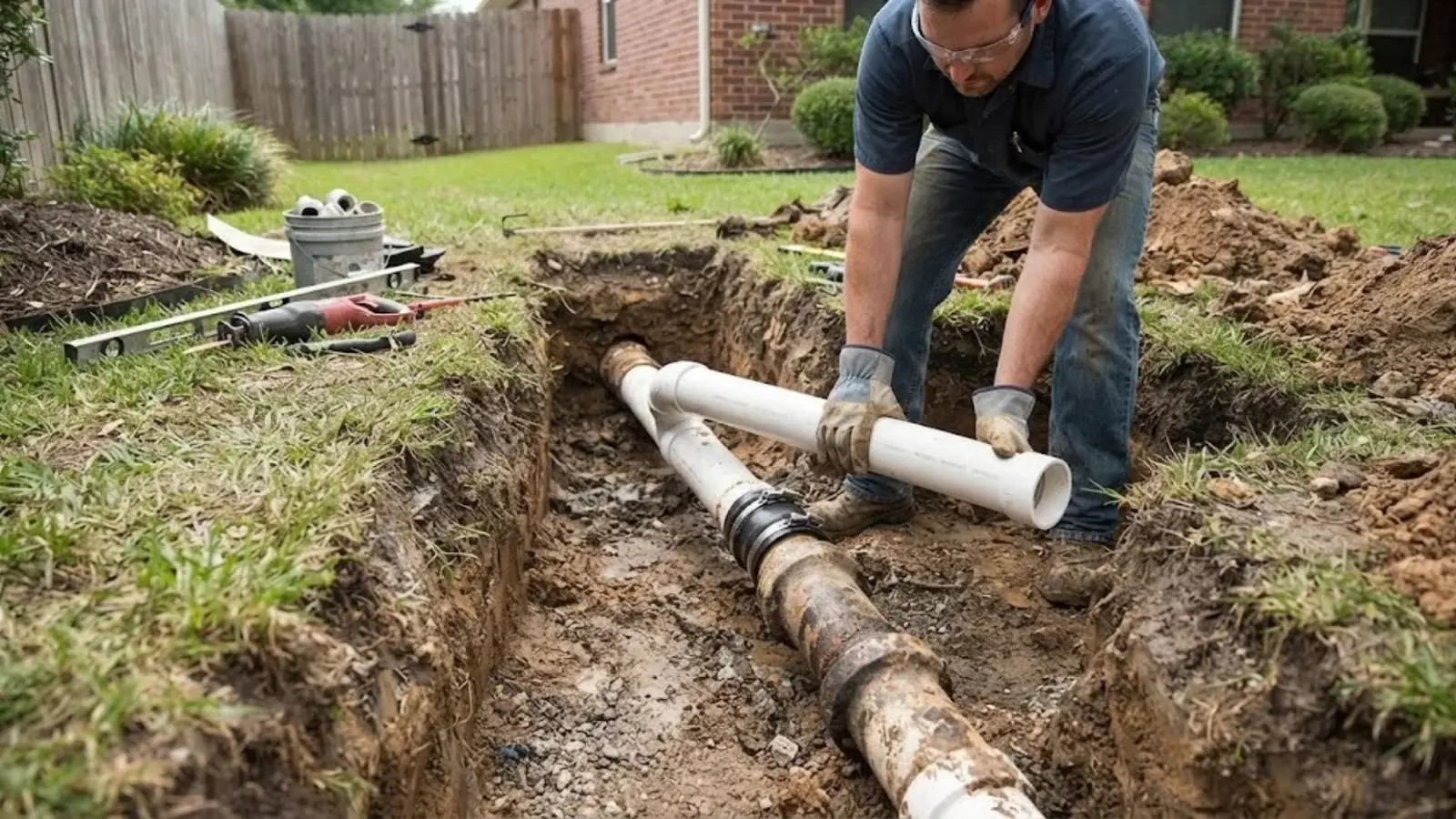
What a sewer liner is.
A liner is a flexible tube coated with resin that is pulled or inverted into an existing pipe and then cured so it hardens. The result is a new pipe inside the old one that seals cracks, joints and small holes and blocks roots from entering. This approach is often called cured in place pipe lining.
It is a trenchless method, which means most of the work happens through an existing cleanout or a small access pit. That usually leaves lawns, driveways and landscaping in place, though the work area still needs room for equipment.
How the process works.
Camera inspection.
We record the pipe to find cracks, roots, offsets and the full length of the run.
Cleaning.
The line is cleared with cable cutters or hydro jetting so the liner bonds well.
Install the liner.
The resin soaked tube is positioned and inflated against the pipe wall.
Cure and verify.
The liner is cured with steam, hot water or light, then inspected by camera again.
Lining or digging.
Our sewer line repair page explains both methods, and sewer camera inspection is where the decision starts.
| Factor. | Lining. | Open trench. |
|---|---|---|
| Surface damage. | Little to none. | Trench through lawn or pavement. |
| Collapsed pipe. | Not suitable. | Replacement works. |
| Severe sags or bellies. | Liner follows the shape and cannot fix the slope. | New pipe can be set to proper pitch. |
| Roots and small cracks. | Well suited. | Also works. |
| Pipe size changes. | Slight reduction in diameter. | Full diameter. |
| Disruption. | Often finished quickly. | Typically longer. |
Need a plumber for this?
Call the 24/7 line and a dispatcher will help you right away.
When lining is a good fit.
Cracks and open joints.
The liner seals leaks without removing the pipe.
Root intrusion.
A smooth liner leaves roots with nothing to enter.
Older clay or cast iron lines.
These often fail at joints and can be relined if the shape is still sound.
Pipes under hardscape.
Lining avoids cutting through driveways and patios.
Long runs with few breaks.
A single liner can span a long section.
Pipes in decent alignment.
The line must hold its shape and slope.
Liner repair: pros and cons.
A good plumber shows you the camera footage and explains why lining is or is not the right fit.
Advantages.
- Less digging and restoration.
- Seals joints and cracks along the run.
- Blocks root entry.
- Often quicker than replacement.
Limits.
- Cannot repair a collapsed pipe.
- May reduce pipe diameter slightly.
- Does not fix a sag or low spot.
- Needs good cleaning and a clear line.
Ask these questions before you agree.
What does the camera show, and can I see the video? Is the pipe round and continuous enough to line? What material and what warranty come with the liner? Will the end connections and cleanouts be restored? Who handles permits?
If an answer is vague, push for detail. A line that is lined without a proper cleaning and inspection can fail early, and a line that needs replacement should not be lined.
Rather have a pro handle it?
Call to ask about timing.
Materials and curing methods.
Liners are usually felt or fiberglass tubes saturated with an epoxy or similar resin. Cure methods include hot water, steam and ultraviolet light. Each has strengths, and the contractor should explain which one they use and why it suits your pipe.
Ask about the expected service life and the warranty terms in writing. A properly installed liner can last for decades, but it depends on the quality of the cleaning, the resin and the installation. If a liner is skipped over a bad section, it can fail early.
Lining a section versus the whole line.
Sometimes only one section of the sewer is damaged. A spot repair liner covers a short length, which is useful when the rest of the pipe is sound. A full length liner covers the run from the house cleanout to the street connection.
The camera shows which option is sensible. If damage appears in several places, a full length liner is often more practical than several spot repairs. If one break stands alone, a spot repair may be enough, and a plumber should explain the reasoning.
Stratford note: digging, permits and the sewer.
Any excavation requires a call to 811 first. Ask the Stratford building department whether your project needs a permit, and ask the Stratford Water Pollution Control office about the public sewer connection for your address.
Homeowners in Bridgeport and Milford should check with their own city offices, since sewer responsibilities and permit steps can differ by town.
The national 811 number connects you to the utility locating service, and a locate request before digging is the standard first step for any buried line work.
Signs your sewer line may need attention.
Repeated main line clogs, slow drains throughout the house, gurgling toilets, sewage smells in the yard and unusually green patches of grass can all point to a damaged line. These signs do not prove a lined or replaced pipe is needed, but they justify a camera inspection.
If you are buying a house, a sewer scope before closing can reveal costly problems. The video helps you plan, negotiate and avoid surprises after you move in.
Questions we hear.
A resin coated tube is cured inside an existing pipe to form a new, smooth inner pipe that seals cracks and blocks roots.
No. Collapsed, badly offset or sagging pipes are usually not good candidates.
Yes. It shows the pipe condition and decides between lining and replacement.
Rules vary. Ask the Stratford building department what applies.
It blocks entry through cracks and joints, though roots can still reach connection points. Maintenance still matters.