
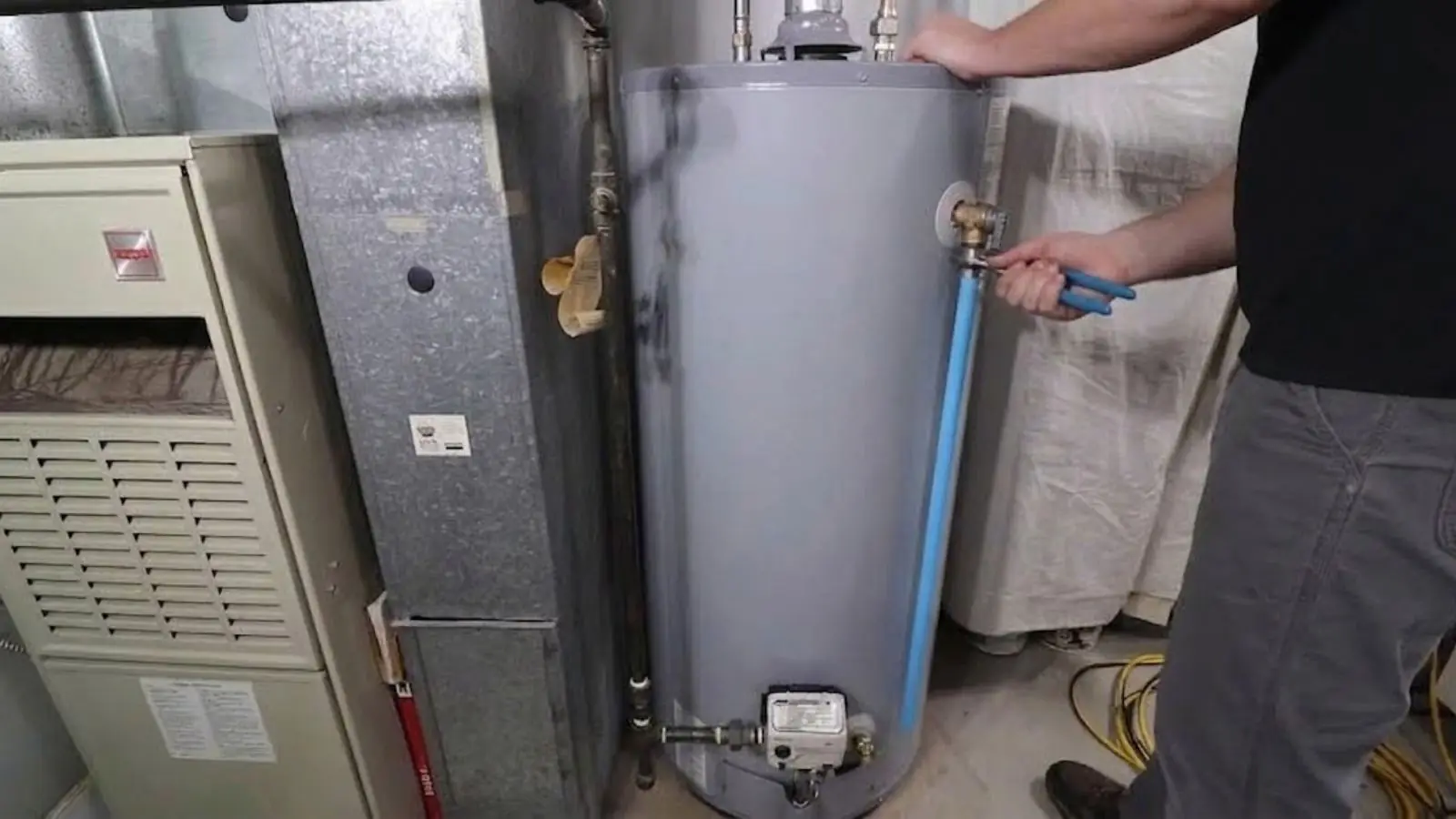
Start with age, then look for leaks.
Most tank water heaters last roughly eight to twelve years, depending on water quality, maintenance and use. The date on the data plate tells you how old yours is. If the tank is past its tenth year and has a problem, replacement deserves a serious look, because the next failure may not be far behind.
Leaks change the question entirely. A leak from a fitting or valve on the top is often repairable. Water seeping from the tank body is not, since the steel liner has failed. If you see water around the base, turn off the power or gas and shut the cold water supply to the tank, then call a plumber.
Repair or replace: a quick reference.
Our water heater repair page explains common fixes, and water heater replacement covers the swap.
| Situation. | Leans toward. | Why. |
|---|---|---|
| Tank under about eight years, no leak, no hot water. | Repair. | A thermostat, element or igniter swap is a small repair. |
| Leaking from the tank body. | Replace. | The liner has failed and cannot be fixed. |
| Leaking from a valve or fitting on top. | Repair. | The part can often be replaced. |
| Older than ten years with rusty water. | Replace. | Corrosion inside the tank points to the end of life. |
| Second major repair in a short time. | Replace. | Repeat repairs add up. |
| Rumbling and popping noises. | Depends. | Sediment can often be flushed, but a very old tank may be worn out. |
Signs a water heater is near the end.
Rust colored hot water.
Corrosion inside the tank sheds rust, and replacing the anode rod only helps if the tank is still sound.
Rumbling or popping.
Sediment layers heat unevenly and make noise.
Water around the base.
Even small drips can signal a failing tank.
Lukewarm water that runs out fast.
A failed element or heavy sediment cuts capacity.
Rising energy bills.
A tank that works harder to heat water costs more to run.
Age past ten years.
Even if it still works, the risk of failure climbs.
Need a plumber for this?
Call the 24/7 line and a dispatcher will help you right away.
The case for repair.
Repair is the right call when the problem is a part and the tank is otherwise healthy. Thermostats, heating elements, igniters, thermocouples, gas valves and relief valves are all replaceable. If your tank is younger and the repair is modest, it can give you years of service.
Ask the plumber what failed and whether other parts are close behind. A tank that needs a gas valve and a new anode rod in the same year is often telling you something about its overall condition.
The case for replacement, including tankless.
Replacement makes sense when the tank has failed or repairs are piling up. A new tank brings a fresh warranty and better efficiency. A tankless unit saves floor space and provides hot water on demand, though it costs more up front and needs proper venting and gas sizing. Our tankless water heater page covers that choice.
Capacity matters too. If your family has grown or you added a bathroom, a larger tank or a second unit may fit better than a like-for-like swap.
How to decide in four steps.
Read the data plate.
Find the age, size and fuel type.
Look for leaks and rust.
Check the base, the valves and the color of the water.
Get the diagnosis.
A plumber tests the thermostat, elements or burner and checks for sediment.
Compare totals.
Weigh the repair, the expected remaining life and the cost of a new unit.
Rather have a pro handle it?
Call to ask about timing.
Capacity, efficiency and fuel.
A replacement is also a chance to fix what never worked. If a four person household ran out of hot water every morning with a small tank, a larger tank or a different type of heater solves the underlying problem instead of repeating it. Efficiency ratings on newer units can lower operating costs compared with older tanks.
Fuel matters as well. Switching between gas and electric changes the venting, wiring or gas piping required, so it is a larger project than a like-for-like swap. Ask the plumber to walk through what the change would involve before you commit.
Stratford note: soft water and tank life.
Aquarion's 2025 water quality report for the Eastern Fairfield County system, which serves Stratford, lists average hardness at about 3 grains per gallon. Soft water means less mineral scale on heating elements and tank bottoms than in hard water areas, so age and corrosion usually decide a tank's life here.
Ask the Stratford building department whether your replacement needs a permit, and note that neighbors in Trumbull and Shelton should ask their own towns.
The U.S. Consumer Product Safety Commission urges users to lower their water heaters to 120 degrees Fahrenheit to reduce the risk of tap water scalds, so ask the plumber to set the thermostat with that guideline in mind.
A leaking tank is an emergency.
If water is running from the tank body, shut off the cold supply valve above the tank and turn off the gas or breaker. Call the 24/7 line. Call to ask about timing.
Questions we hear.
Most tanks last about eight to twelve years. Soft water reduces scale, so age and corrosion are the usual limits.
Sometimes, for a small part. If the tank leaks or repairs keep coming, replacement is usually the better value.
Flushing can clear sediment on a healthy tank. On an old tank with heavy buildup, it may not help.
Rules vary. Ask the Stratford building department what applies to your project.
It lowers scale risk, but corrosion and age still matter, so check the tank for rust and leaks.