
What boiling water can and cannot do.
Boiling water melts and loosens fat and soap that has stuck to the inside of a kitchen drain. For a light film, a slow pour of very hot water can restore flow. It does little against hair, wipes, paper, food chunks, roots or a solid object, because heat does not dissolve them.
That limitation explains why the trick works for some people and not for others. If the clog is grease, hot water helps. If it is anything else, you will be waiting for a result that will not come.
Which pipes tolerate boiling water.
If you are not sure what your pipes are made of, use hot tap water, not boiling water.
| Pipe or fixture. | Boiling water. | Why. |
|---|---|---|
| Metal pipe. | Usually fine. | Handles heat well, though old pipe may be fragile. |
| PVC pipe. | Risky. | Can soften, sag or loosen at joints. |
| ABS pipe. | Risky. | Also softens with heat. |
| Porcelain sink or toilet. | Not recommended. | Sudden heat can crack the fixture. |
| Stainless steel sink. | Usually fine. | Pour slowly in the drain opening. |
| Garbage disposal. | Use hot tap water. | Boiling water adds little. |
A safer way to use heat.
Use very hot tap water.
Run the hot tap for a minute to send heat through the trap and branch line.
Add dish soap.
A squirt of dish soap helps cut a grease film.
Plunge gently.
A sink plunger moves a loosened clog better than heat alone.
Rinse again.
Run hot water until the sink drains freely.
Need a plumber for this?
Call the 24/7 line and a dispatcher will help you right away.
Better tools than a kettle.
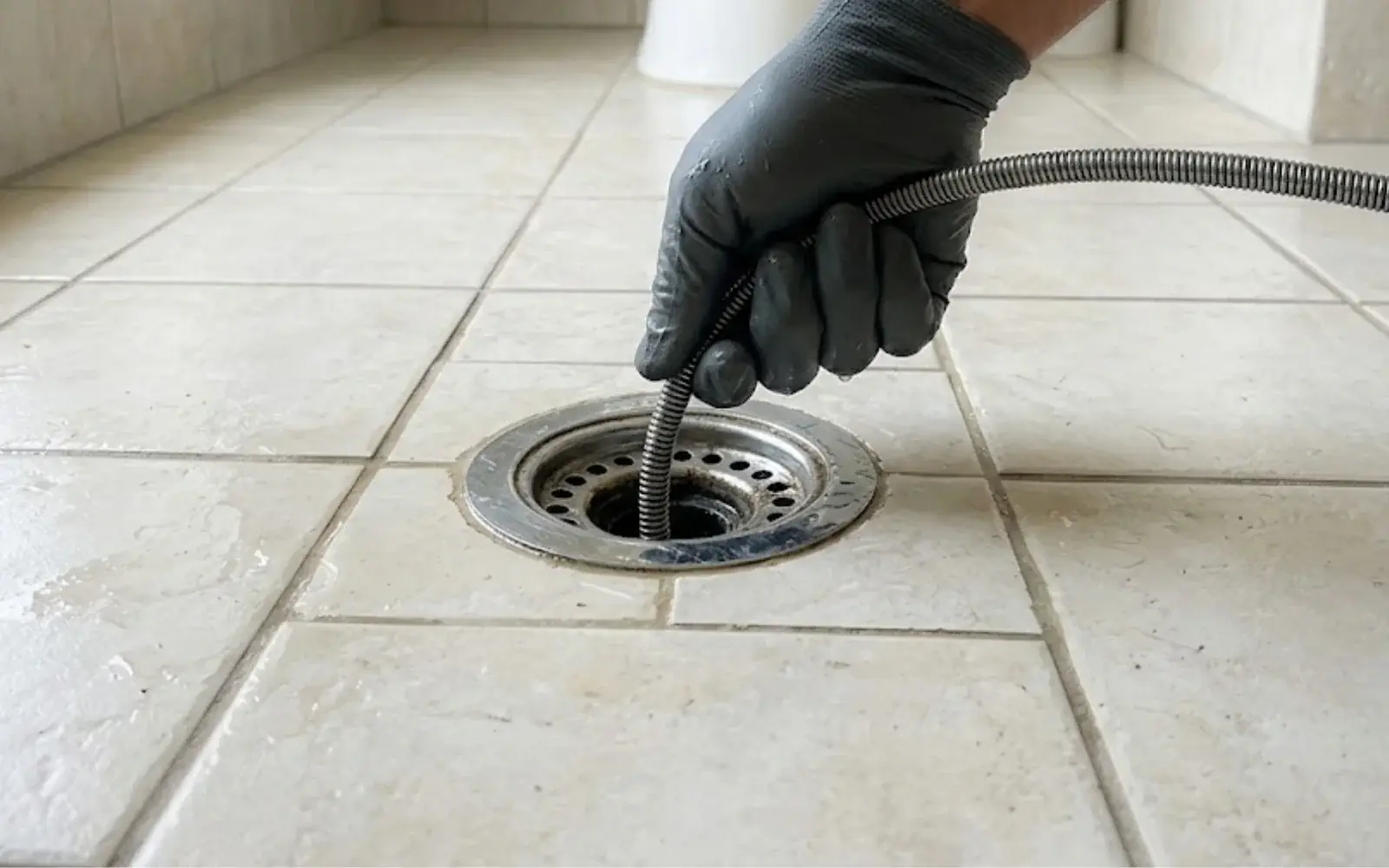
A sink plunger, a hand drain snake and a trap cleanout are more reliable than boiling water. A snake reaches the clog and breaks or pulls it out. Removing and cleaning the trap under a sink catches the debris right where it collects.
For slow drains across the house, none of these will reach the main line. That is when a longer cable or hydro jetting is needed, and a camera shows what is causing the problem.
When boiling water is the wrong answer.
Several fixtures draining slowly.
The clog is in the main line, far beyond what you can reach.
A toilet clog.
Hot water can crack the porcelain and does nothing for paper or wipes.
A plastic trap or drain.
Heat can warp it.
A recent chemical cleaner.
Mixing hot water with leftover chemicals can splash or give off fumes.
A floor drain backing up.
This usually points to a larger problem that needs a plumber.
Repeated clogs.
A coated pipe or roots call for a cable and a camera, not a kettle.
Home remedy or professional.
When a backup is rising, stop and call the 24/7 line. Our drain cleaning service clears the line safely.
Good for.
- A light grease film in a kitchen drain.
- A mild slow drain after cooking.
- Routine maintenance with hot tap water.
- Odors from soap residue.
Not good for.
- Hair and wipe clogs.
- Tree roots.
- Collapsed or sagging pipe.
- A full backup into a tub or floor drain.
Rather have a pro handle it?
Call to ask about timing.
What actually causes a kitchen clog.
Most kitchen clogs begin with fat. Warm grease flows easily, then cools and sticks to the pipe wall. Food particles, coffee grounds and soap residue stick to that layer, and the pipe narrows until water barely moves. Boiling water melts the surface of the layer but does not remove what is stuck behind it, so the clog often returns.
A cable or jetter scrapes the pipe clean, which is why professionals use them. If you find yourself pouring hot water every week, the pipe has probably built up a layer that needs real cleaning.
Safety around hot water: what to do and what not to do.
Boiling water in a kettle is a scald risk, and a splash from a drain can burn skin. Keep children and pets out of the room, wear shoes and pour slowly. Never combine boiling water with chemical drain cleaners, because mixing can release fumes or splatter caustic liquid.
If you have already used a chemical cleaner, tell the plumber. They need to know before they open the trap or run a cable, so they can protect their hands and eyes.
Stratford note: what goes down the drain.
What you pour down a kitchen drain eventually reaches the sewer. If you are unsure what your street connects to, ask the Stratford Water Pollution Control office, and call 811 before digging near lines.
Households in Bridgeport and Fairfield have similar older pipe stock in many neighborhoods, so the same caution about heat and plastic applies there.
According to the Connecticut Department of Consumer Protection, you can check whether a contractor holds an active license through the state eLicense lookup, which is worth doing before any plumber starts work.
A simple prevention routine.
Wipe grease from pans into the trash before washing. Run hot tap water for about thirty seconds after using the sink. Use strainers in kitchens and showers, and avoid pouring coffee grounds or rice down the drain.
Once a month, flush kitchen drains with hot tap water and a little dish soap. If a slow drain returns within a few weeks, ask for a camera inspection. A fix that keeps failing points to damage, not dirt.
Questions we hear.
It can melt a light grease film but does nothing for hair, wipes or solids. Use hot tap water if you are unsure of your pipe material.
It can soften PVC and loosen joints. Hot tap water is safer.
It is not recommended. Sudden heat can crack the porcelain.
Try a plunger or snake. If several fixtures are slow, call a plumber.
Not necessarily. Ask the Stratford Water Pollution Control office about your address.