
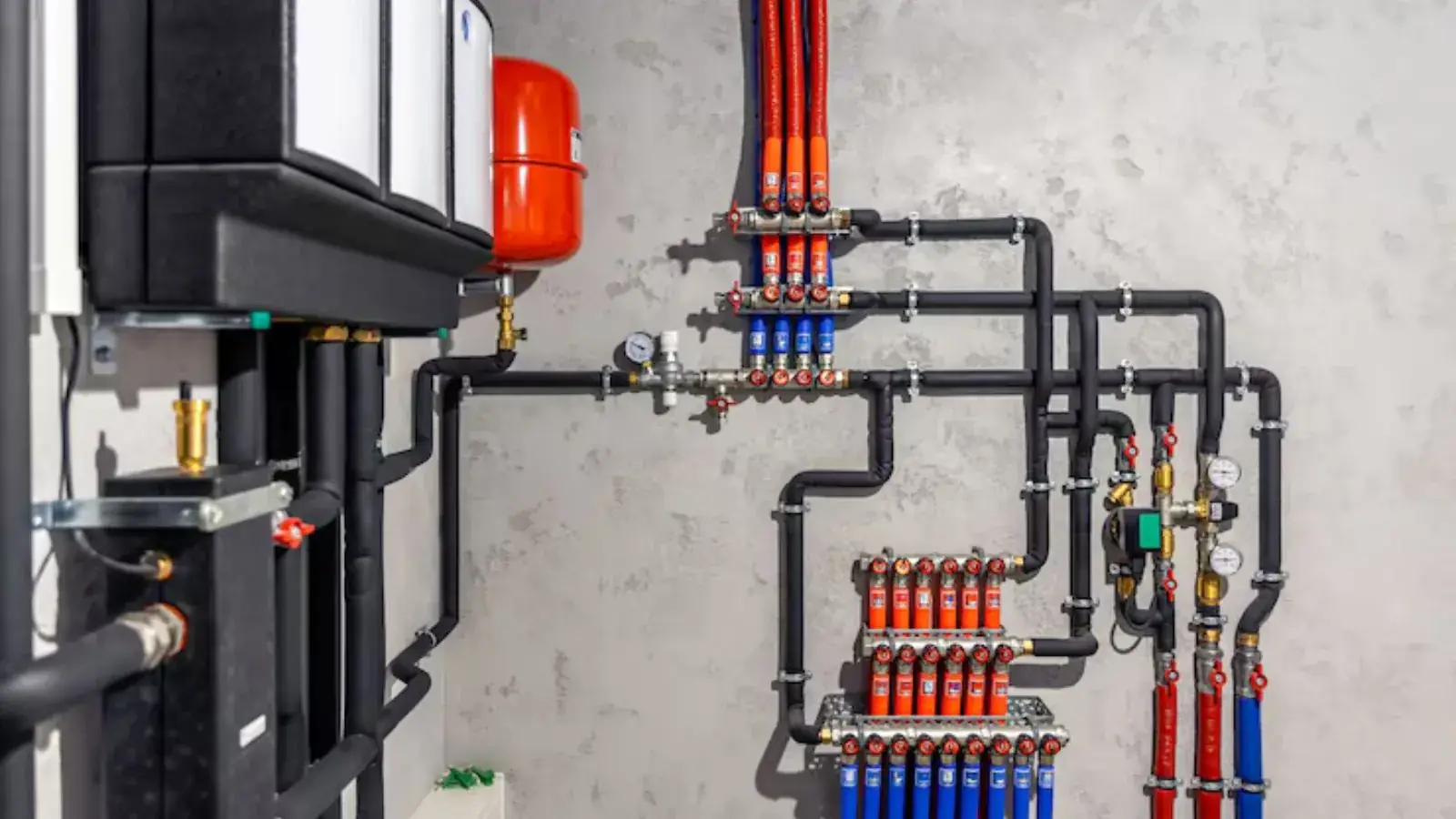
Why fall is the time to look.
Boilers sit idle most of the summer, and that rest is when small problems form. Valves stick, controls drift and water pressure shifts. When the first cold night arrives, a boiler that was fine in April may fail to start. A fall check finds those problems while there is still time to fix them without an emergency.
Connecticut winters are cold enough that a heating failure can freeze pipes within a day. Knowing your boiler is ready lowers the risk of a burst line as well as a cold house.
What you can check yourself.
Look at the pressure gauge.
Many residential boilers sit near 12 to 15 psi when cold, but your manual gives the right range.
Check around the boiler.
Look for water stains, rust, soot and corrosion on pipes and fittings.
Bleed radiators.
If upper floors are cool, release trapped air through the small valves.
Clear the area.
Keep storage, paint and flammables at least a few feet away from the unit.
What a professional should service.
A visit like this can be combined with a repair if something needs attention. See our boiler repair page.
| Item. | What the tech checks. |
|---|---|
| Burner and combustion. | Flame pattern, efficiency and carbon monoxide levels. |
| Heat exchanger. | Cracks, scale and soot. |
| Circulator pump. | Flow, noise and leaks at the flanges. |
| Relief valve. | Proper operation and a clear discharge pipe. |
| Expansion tank. | Charge and water logging. |
| Controls and thermostat. | Limit switches, aquastat and safe lockout. |
| Venting and flue. | Draft, leaks and blockages. |
Need a plumber for this?
Call the 24/7 line and a dispatcher will help you right away.
Warning signs of a failing boiler.
Pressure that keeps dropping.
A leak or failed autofill is letting water out of the system.
Loud banging or kettling.
Scale or sediment on the heat exchanger traps steam bubbles.
Cold spots in radiators.
Trapped air or poor circulation prevents heat from spreading.
Yellow or flickering flame.
Poor combustion can produce carbon monoxide.
Frequent cycling or lockouts.
A control or safety circuit is shutting the unit down.
Water around the base.
A leaking fitting or failing heat exchanger needs urgent care.
Gas smell or carbon monoxide alarm: what to do.
If you smell gas, leave the house and call 911 and the gas utility from outside. If a carbon monoxide alarm sounds, go outdoors into fresh air and call 911. Do not return until the building is cleared. Once it is safe, call us for the boiler.
Annual service or wait for trouble.
If your boiler is more than twenty years old, ask the technician about its condition and expected remaining life.
Annual service.
- Catches small faults early.
- Keeps efficiency up.
- Confirms safe combustion.
- Costs less than an emergency visit.
Waiting for trouble.
- Faults show up on the coldest day.
- Parts may be harder to find in a rush.
- Safety problems can go unnoticed.
- Pipes can freeze while heat is out.
Rather have a pro handle it?
Call to ask about timing.
Hot water boilers versus steam boilers.
Most Connecticut homes with a boiler use hot water heating, where heated water circulates through baseboards or radiators. Some older homes use steam, where the boiler makes steam that rises through pipes to radiators. The two systems need different attention, and you should know which one you have.
Steam systems rely on the correct water level, working traps and radiator vents, and a low water cutoff that needs regular flushing. Hot water systems rely on the right pressure, a charged expansion tank and a working circulator. A technician should check each of these on the first visit of the season and explain what they found.
Keep a record and keep it simple.
Write down the make, model and age of the boiler and where the shutoffs are. Note the pressure when cold. Photograph the gauge once a month during the heating season. When something changes, you have a record to show the technician, and the diagnosis goes faster.
Also think about what could go wrong if you are away. A boiler failure while you travel can freeze pipes. A neighbor with a key, a thermostat that alerts you and a plan for who to call give you a margin of safety.
Stratford note: carbon monoxide and permits.
Ask the Stratford building department what permits and inspections apply if you replace or relocate a boiler or change venting. Rules vary by project, and the department can tell you what is needed for yours.
Install carbon monoxide alarms near sleeping areas and on each level, and test them each month. Neighbors in Trumbull and Shelton with oil or gas boilers should follow the same practice.
According to the International Code Council, Connecticut's state building codes are based on the 2021 International Codes, so ask the Stratford building department which edition applies to your project.
After the checkup.
Keep a simple log of service dates, pressure readings and any repairs. Note where the main water shutoff and the boiler shutoff are, and make sure everyone in the house knows. If a boiler repair involves your water heater, our water heater repair page explains how that side is handled.
Finally, set your thermostat and test a full heating cycle on a cool day before winter. If anything is off, you will have time to call, schedule a visit and avoid a middle of the night emergency.
Questions we hear.
Yearly is common, before the heating season. Your manufacturer or technician can confirm for your unit.
Many residential hot water boilers sit around 12 to 15 psi when cold. Check your manual for the right range.
Scale, sediment or low water flow can cause it. Have it checked, since it can strain the heat exchanger.
Rules vary. Ask the Stratford building department what applies to your project.
If upper floors are cool or you hear gurgling, bleeding releases trapped air. If it recurs, have the system checked.